 Vietnamese
 English




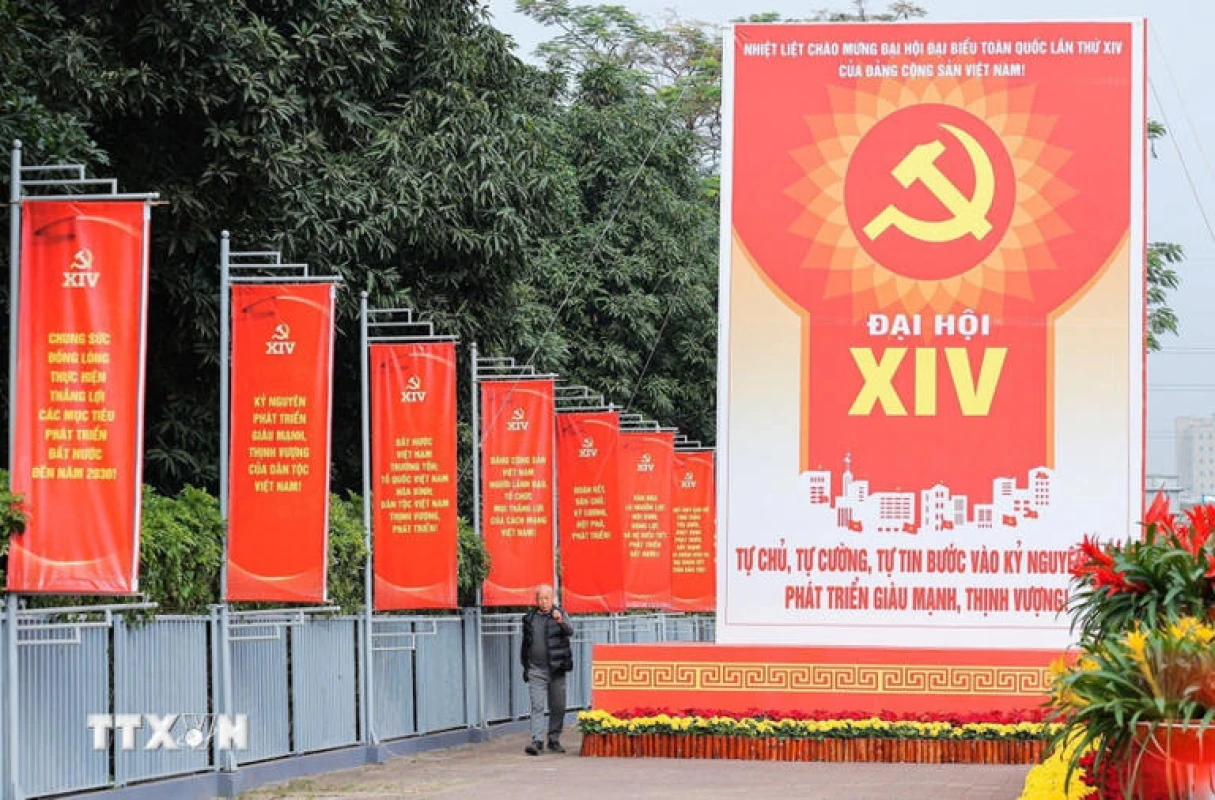
Minister Nguyen Kim Son has conducted a comprehensive assessment of the education and training sector’s implementation of the Resolution of the 13th National Party Congress, while also sharing proactive and strategic steps to carry out key tasks in the new development phase.
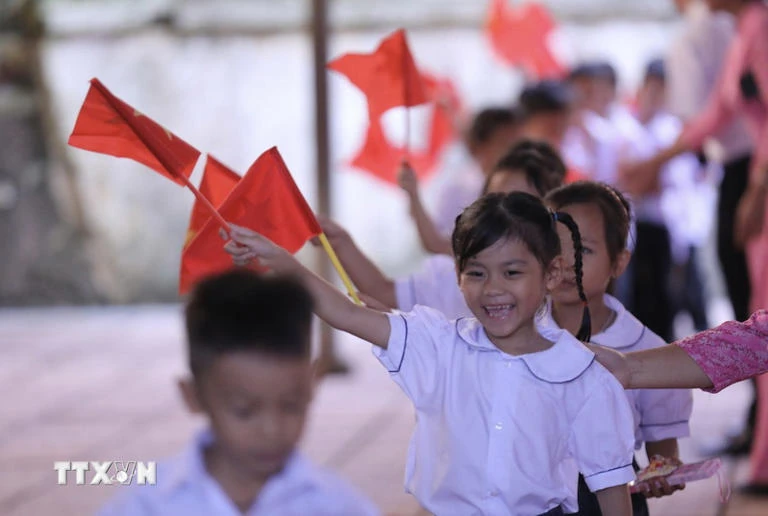
During the implementation term of the Resolution of the 13th National Party Congress, amid highly exceptional circumstances, Vietnam’s education and training sector not only fulfilled many important objectives but also established solid foundations for a new stage of development.
The Minister of Education and Training, Nguyen Kim Son, provided an in-depth evaluation of the outcomes achieved in implementing the Resolution of the 13th National Party Congress. At the same time, he highlighted the sector’s proactive and decisive actions in rolling out strategic tasks from the pivotal year onward, aiming to seize opportunities and successfully realize breakthroughs in education and training development.
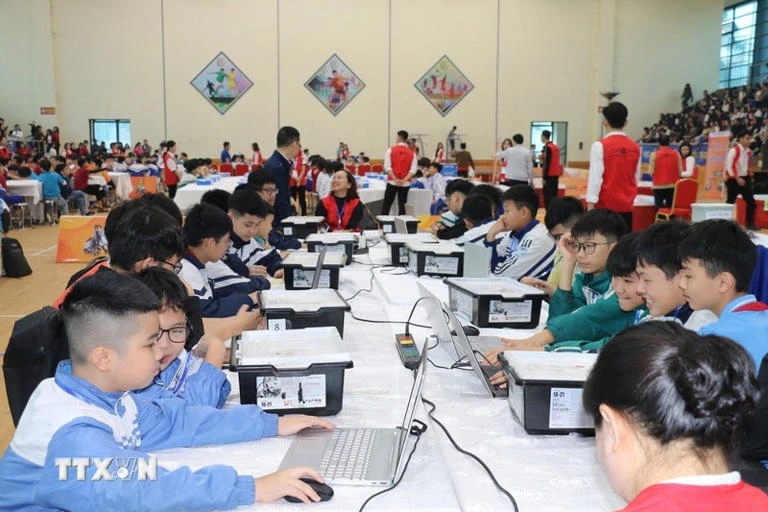
Early Achievement of Many Targets Set by the Resolution of the 13th National Party Congress in Education and Training
Question: Could the Minister outline the key achievements of the education and training sector during the term of the 13th National Party Congress—a term marked by particularly challenging circumstances?

Minister Nguyen Kim Son: The five-year term implementing the Resolution of the 13th National Party Congress has been a unique and challenging period for education and training. This phase continued the strong implementation of fundamental and comprehensive reforms in education, in line with Resolution No. 29-NQ/TW (November 4, 2013) of the Party Central Committee, along with other major orientations and policies of the Central Government.
Under the leadership of the Party Central Committee, the National Assembly, and the Government; with the dedication of teachers, administrators, and students; and with the support and consensus of the public and parents, the education and training sector has achieved significant results. Many contents of Resolution No. 29-NQ/TW have been effectively implemented, yielding tangible outcomes over the past five years.
Overall, during the implementation of the Resolution of the 13th National Party Congress, the education sector has largely met its targets regarding access to education.
Over the past five years, general education reform has been identified as a core focus. The entire sector successfully completed the rollout of the 2018 General Education Curriculum from Grade 1 through Grade 12, in accordance with the established roadmap. Through this process, the transition from a knowledge-heavy education model to one focused on the holistic development of learners—emphasizing qualities, competencies, and skills—has largely been achieved.
Reforms in teaching methods, assessment and evaluation, the organization of the national upper secondary graduation examination, and other aspects of general education have also yielded significant results. Evaluations by National Assembly supervisory delegations and relevant authorities indicate that the core objectives of general education reform have been basically fulfilled.
Another major highlight is digital transformation. The education sector has taken pioneering steps in digital transformation and in building sector-wide databases. Since 2022, the national database of general education students has enabled fully online registration for the upper secondary graduation examination and university admissions. This has significantly enhanced transparency, efficiency, and convenience for learners.
At the same time, databases covering schools, learners, and teachers have been established. The lifelong learning record database—comprising digital academic transcripts and digital diplomas—has been implemented and initially connected with the National Public Service Portal. This integration helps simplify administrative procedures related to diplomas and certificates, saving time and costs for citizens and society. Higher education institutions have also accelerated the application of artificial intelligence (AI) in teaching, management, and the development of smart campus models.
It can be said that advancing digital transformation, building comprehensive databases, and the initial application of AI in teaching and learning are among the bright spots, demonstrating the education sector’s pioneering role in modernization and quality enhancement.
A key hallmark of the sector has been its strong focus on developing the teaching workforce—a foundational and decisive factor in improving education quality. Over the past five years, the teaching workforce has expanded in scale, improved in structure, and advanced in quality. The Politburo, the Secretariat, and the Government have allocated a significant number of additional staffing positions to the education sector, ensuring the principle that “where there are students, there are teachers and schools,” particularly strengthening preschool and primary education.
Numerous incentive and remuneration policies have been issued, helping attract and retain teachers. A positive sign in recent years is that admission scores for teacher-training institutions have ranked among the highest. Improved input quality in teacher education is an encouraging indicator, laying an important foundation for enhancing the quality of teachers and, consequently, education overall.
In addition, the proportion of lecturers holding doctoral degrees in higher education institutions has continued to rise, reaching over 33% by 2025, reflecting notable progress in workforce quality. Policies for university lecturers have also been reviewed, supplemented, and implemented.
It can be affirmed that the objectives, targets, and requirements set forth in the Resolution of the 13th National Party Congress, as well as in the five-year socio-economic development plan for education and training, have largely been achieved—some even ahead of schedule with positive outcomes.
Launching Early Initiatives Without Waiting Until After the Congress
Question: Among the achievements of the five-year term, how does the Minister assess the education sector’s imprint in 2025—the pivotal year between two Party Congress terms?
Minister Nguyen Kim Son: The education and training sector has achieved many important results. However, the country is entering a new development stage with increasingly high demands for both the speed and quality of socio-economic growth, alongside new development goals shaped by practical realities.
With the aspiration that by 2045 Vietnam will become a developed, high-income country, and that its education system will rank among the top 20 most advanced education systems worldwide, the requirements for education and training development must reach a new level of intensity, speed, scale, and quality compared to previous periods.
In response, the Politburo issued Resolution No. 71-NQ/TW in August 2025, setting out objectives for breakthrough development in education and training, modernization, and quality enhancement to foster comprehensive human development and provide high-quality human resources for national development.
Resolution No. 71-NQ/TW serves as a crucial strategic orientation, forming the basis for transformative changes in education and training in the coming period. Its core contents have been incorporated into draft documents for the 14th National Party Congress, providing a foundation for implementation in the next phase.
As early as 2025, the education sector proactively began implementing new programs, contents, and objectives—without waiting until after the Congress—with many initiatives launched well in advance.
Based on the breakthrough-oriented and action-driven directions of Resolution No. 71-NQ/TW, the Ministry of Education and Training has actively advised the Government and submitted key institutional adjustments to the National Assembly, establishing a legal framework for effective implementation in the coming period.
In 2025 alone, the Ministry submitted four major draft laws to the National Assembly for consideration:
The Law on Teachers
The Amended Law on Education
The Amended Law on Higher Education
The Amended Law on Vocational Education
In addition, the Ministry advised the Government to submit several important resolutions, including:
A resolution on universal preschool education for children aged 3–5
A resolution on tuition fee exemptions and support for preschool children, general education students, and learners in the national education system
A resolution on the National Target Program for the modernization and quality enhancement of education and training (2026–2035)
A resolution on special and breakthrough mechanisms and policies for education development
With the enactment of these laws and resolutions, the key objectives and orientations of Resolution No. 71-NQ/TW have been substantially institutionalized. The immediate priority is to issue guiding and subordinate legal documents to ensure rapid and effective implementation.
With a strong focus on institutional reform and innovation, 2025 stands out as a particularly important pivotal year—closing the previous five-year cycle while opening a new phase of educational reform and laying the groundwork for sustainable development.
Implementing the Resolution with Renewed Determination and Strong Commitment
Looking ahead, the implementation of the Resolution of the 14th National Party Congress and Resolution No. 71-NQ/TW will involve extensive work. The education sector is moving forward with renewed determination and strong political will.
A foundational task is the renewal of thinking and awareness regarding education and training—recognized as the starting point and prerequisite for all subsequent reforms. This includes redefining perceptions of the role, position, responsibility, and mission of education; reaffirming the State’s leading role; strengthening the core position of public education institutions; and improving the mobilization, investment, and effective use of resources.
Equally important is a renewed understanding of autonomy in education, alongside strengthened comprehensive leadership of Party organizations within educational institutions, particularly in higher education and vocational education.
Key priorities include orienting training toward meeting national development needs, ensuring that public education institutions—especially public universities—focus on high-quality human resource training and scientific research.
Resource mobilization, particularly financial resources and infrastructure, is another major priority. The education sector is actively implementing the National Assembly’s resolution on the National Target Program for the modernization and quality enhancement of education and training (2026–2035), which sets specific goals for improving facilities across all education levels, with a focus on modernizing higher education institutions and selected vocational education institutions.
With increased investment, higher public spending on education and research, and stronger support mechanisms, the education system is expected to undergo significant transformation in scale, quality, structure, and international standing.
Non-public education institutions are also being encouraged to participate actively in training in emerging technology fields such as semiconductors, nuclear energy, transportation, artificial intelligence, and other high-tech sectors.
A core task of the coming period is to train and supply high-quality human resources in key technological and engineering fields, while strengthening scientific research, technology transfer, and cooperation with enterprises to generate practical research outcomes that contribute to socio-economic development.
In line with Resolution No. 71-NQ/TW, the Ministry has incorporated numerous tasks into its five-year action plan. These include reforming preschool education programs, deepening general education reform, gradually introducing English as a second language in schools, accelerating digital transformation, building comprehensive education databases, developing open educational resources, and applying AI in education in a controlled, safe, and effective manner.
Ensuring equity in education access, particularly for students in disadvantaged areas, ethnic minority communities, border regions, and islands, remains a priority. The construction of 248 schools in border communes is being actively implemented, with the first 100 schools expected to be completed in 2026.
With strengthened infrastructure investment, education in border, mountainous, and ethnic minority areas is expected to see significant improvements, helping narrow gaps and ensure greater equity in access to education in the years ahead.