 Vietnamese
 English





In the context of international integration and the growing demand to enhance national competitiveness, vocational education and training (VET) plays a vital role in providing a skilled workforce capable of meeting the requirements of socio-economic development. Vietnam’s VET system is entering a period of profound reform, encompassing not only training content and delivery methods but also institutional mechanisms, financial policies, and the legal framework.
Pursuant to Government Resolution No. 51/NQ-CP dated March 18, 2025, and Resolution No. 77/2025/UBTVQH15 dated April 21, 2025, of the National Assembly Standing Committee on adjusting the 2025 Legislative Program, the Ministry of Education and Training (MOET) has initiated the development of the amended Law on Vocational Education and Training in accordance with the Law on Promulgation of Legal Documents. Five major policy areas are expected to be developed and institutionalized in the amended Law on Vocational Education and Training.
Five Major Pillars of Reform
First, reforming the VET system. The reform aims to institutionalize the Party’s policies and orientations and further improve the national education system toward greater openness, flexibility, and connectivity, thereby creating lifelong learning opportunities for all citizens. It seeks to strengthen educational and career pathways and increase the number of students entering VET after completing lower secondary and upper secondary education.
The reform also aims to provide vocational training, general education, and occupational competency development for learners at VET institutions, while accelerating the roadmap toward universal access to vocational skills training for young people.
This systemic reform is intended to address existing shortcomings in career guidance, educational streaming, and articulation between educational levels, as well as imbalances in the structure of occupations, qualification levels, training scale, quality, and effectiveness. Particular attention will be paid to high-quality human resources, emerging occupations, advanced skills, and international integration.
Accordingly, the new policy will focus on developing open and flexible training programs that facilitate pathways between general education, vocational education, and higher education. This is particularly important in the context of the Ministry of Education and Training’s integrated management of different levels of education, helping establish effective learning pathways and encouraging learners to participate in the VET system.
Second, reforming training programs, training organization, and quality assurance in VET. The reform will diversify training programs, durations, forms, delivery methods, and qualifications in an open, flexible, and practice-oriented direction. It will create favorable conditions for lifelong learning, enabling people to improve, update, and transform their occupational competencies in response to technological and labor-market changes.
These reforms will contribute to the restructuring of the labor force, improving productivity and enhancing the competitiveness of the economy. Greater emphasis will be placed on improving the quality of college-level training programs, scaling up and transferring advanced training programs, and promptly updating new standards and technologies in VET. This will help meet the growing demand for highly skilled workers, particularly in key and strategic sectors that are critical to national development.
Third, effectively attracting enterprises and foreign investment into VET. Under this policy, regulations on international cooperation and foreign investment in VET will be strengthened. Policies will also be introduced to encourage enterprises to mobilize their workforce to participate in teaching and training at different VET levels.
At the same time, the policy seeks to leverage the financial resources and professional expertise available within enterprises, strengthen the linkage between training and production, business, and services, and promote closer cooperation between VET institutions and the business community.
Fourth, reforming financial and investment mechanisms and policies based on quality, efficiency, openness, and transparency in VET institutions.
The policies under the amended Law will focus on transparency in financial management, greater autonomy, and enhanced accountability for VET institutions, while ensuring learners’ rights and interests through reasonable tuition policies, scholarships, and financial support.
The objective is to build a modern, transparent, and equitable VET system that promotes appropriate educational streaming and better responds to the sustainable development needs of society.
Fifth, strengthening decentralization and delegation of authority and improving the effectiveness of state management of VET. One of the key highlights is the expansion of decentralization and delegation of authority, promoting the role and responsibility of institutional leaders while combining ex ante and ex post management mechanisms, particularly in specialized fields such as medicine and pharmacy.
In addition, the policy emphasizes simplifying investment conditions and reducing administrative procedures in order to create a more favorable environment for the development of VET.
With two major focuses - greater decentralization for training institutions and streamlined legal requirements - this policy is expected to improve management effectiveness, contribute to higher-quality vocational training, and better meet society’s demand for skilled human resources. It also reflects a modern governance trend that can provide strong incentives for vocational institutions to innovate their training models.
Challenges and Expectations from Institutional Reform
To effectively achieve the objectives of VET reform, the education sector still faces several challenges.
First, the transition of VET management to the Ministry of Education and Training will require time to harmonize organizational structures and procedures and to avoid disruption or interruption to the operations of VET institutions.
Second, public awareness and perceptions of VET remain limited in some areas.
Third, the management and administrative capacity of certain local authorities and VET institutions needs to be strengthened to keep pace with the requirements of greater decentralization and delegation of authority.
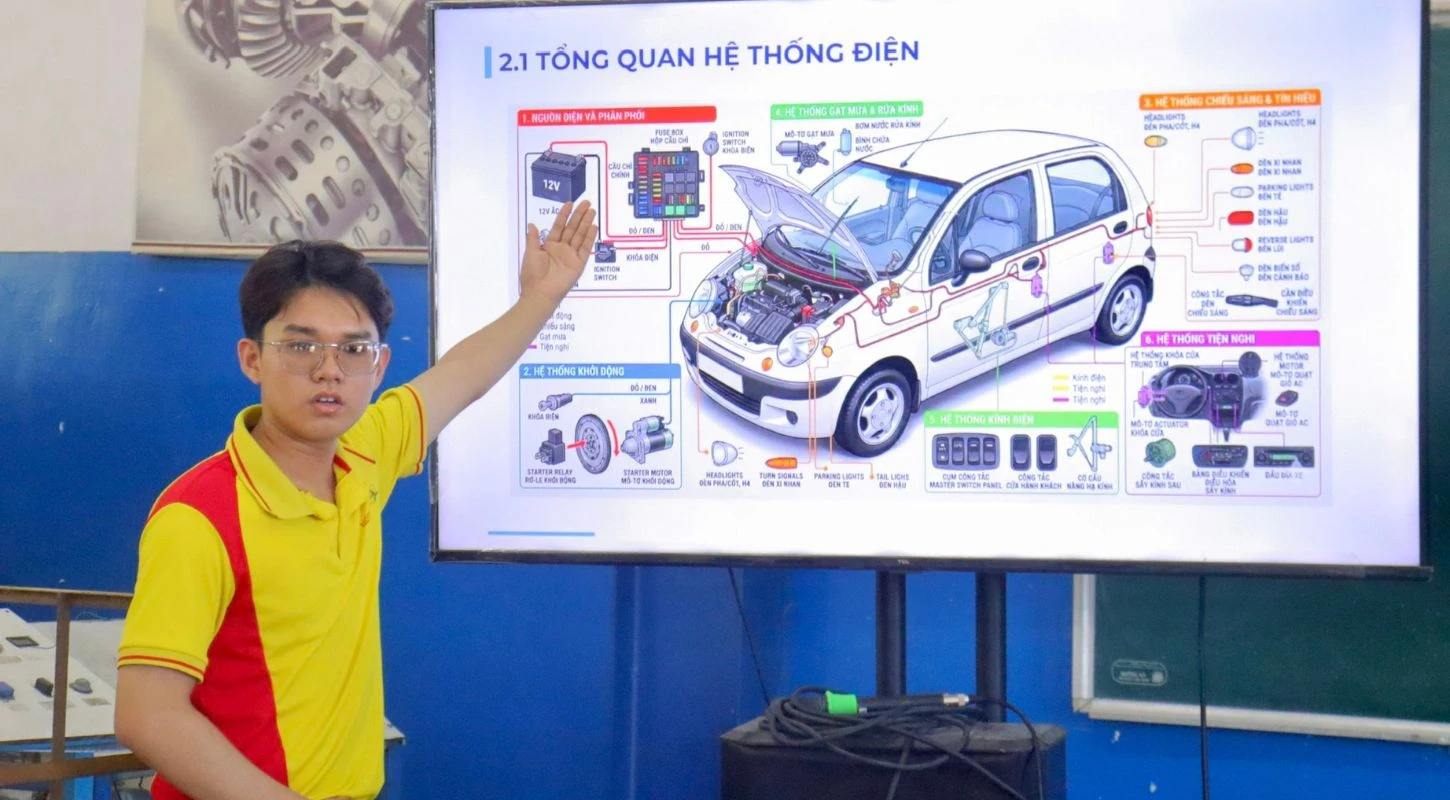
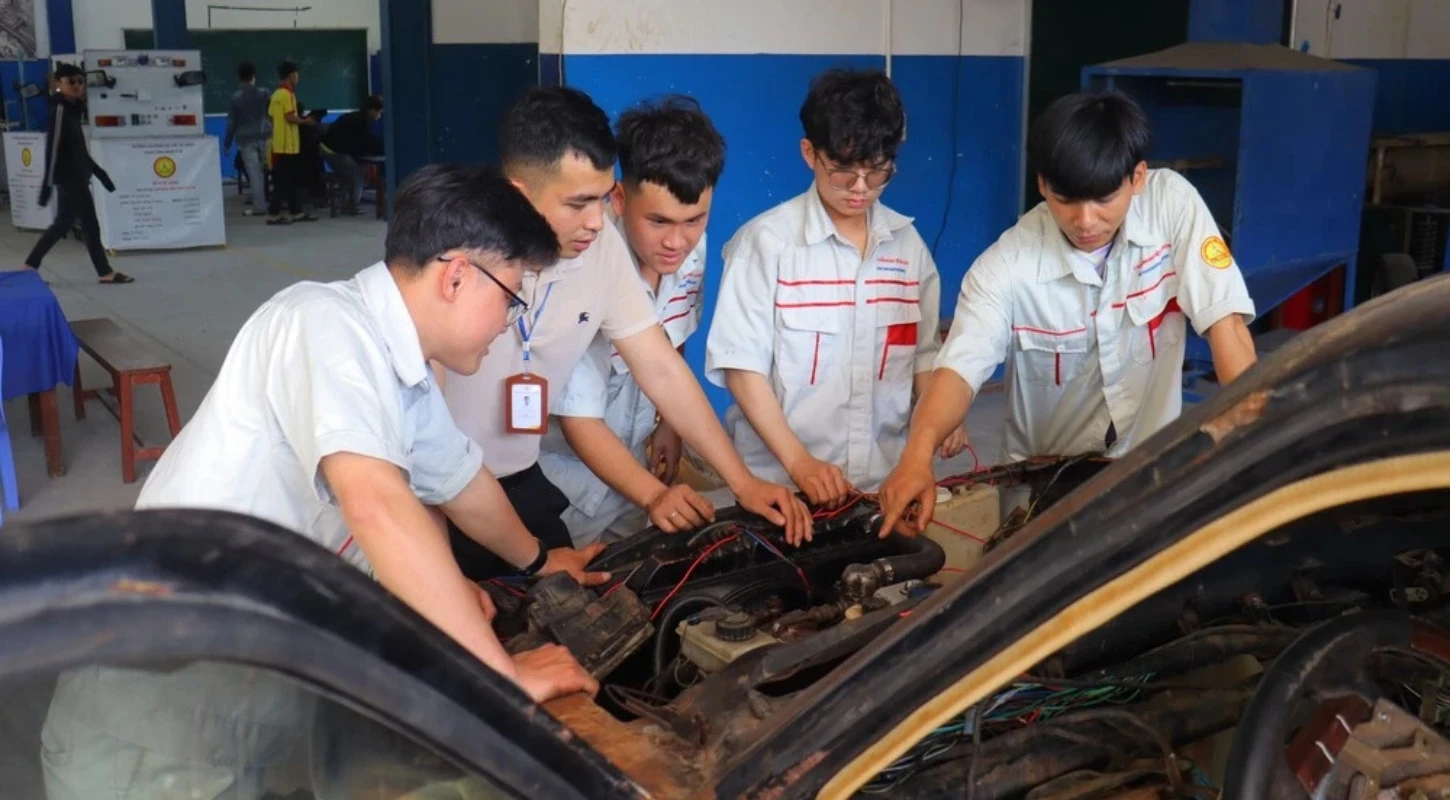
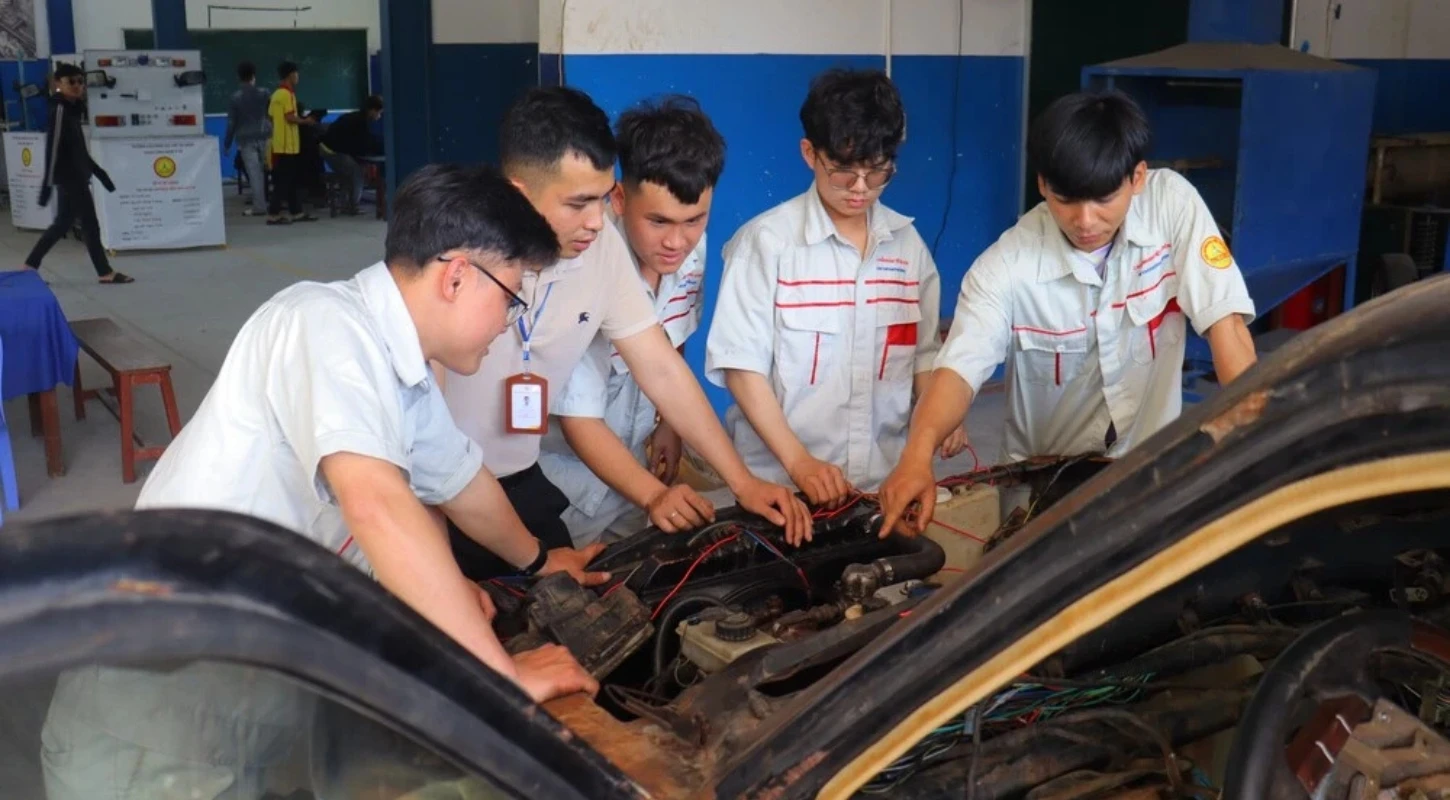
Innovation in Practical Vocational Training for Automotive Technology Students
To address these challenges, a range of complementary measures should be implemented in a coordinated manner. These include strengthening public communication and social awareness to enhance the position and attractiveness of VET; providing training, retraining, and capacity-building programs for managers and teachers; and expanding international cooperation and learning from countries with advanced VET systems.
If these policies are successfully implemented, Vietnam’s VET system will make significant progress in both scale and quality. It will ensure greater consistency in training objectives, learning outcomes, and learning pathways while enabling more effective allocation of investment resources.
Policies concerning finance, decentralization, quality assurance, educational streaming, and career guidance will contribute to the development of a flexible and modern VET ecosystem. VET will increasingly become one of the important pillars of the national education system, providing a high-quality skilled workforce and contributing significantly to enhancing Vietnam’s national competitiveness.